
Pet Care Technology Trends Shaping Home Wellness in 2026
Pet Care Technology is moving beyond convenience in 2026. It now shapes how households manage nutrition, hygiene, recovery, and early health detection, while also redefining where long-term value forms across the broader pet economy.
That shift matters because home wellness is no longer separate from clinical care. Veterinary-grade diagnostics, connected devices, and precision feeding systems are increasingly linked, creating a more continuous model of care between the home, the clinic, and the supply chain.
For companies tracking growth, this makes Pet Care Technology a strategic category rather than a narrow hardware segment. It sits at the intersection of animal health, consumer electronics, food engineering, rehabilitation, compliance, and data-driven service design.
Why home wellness has become a serious technology market
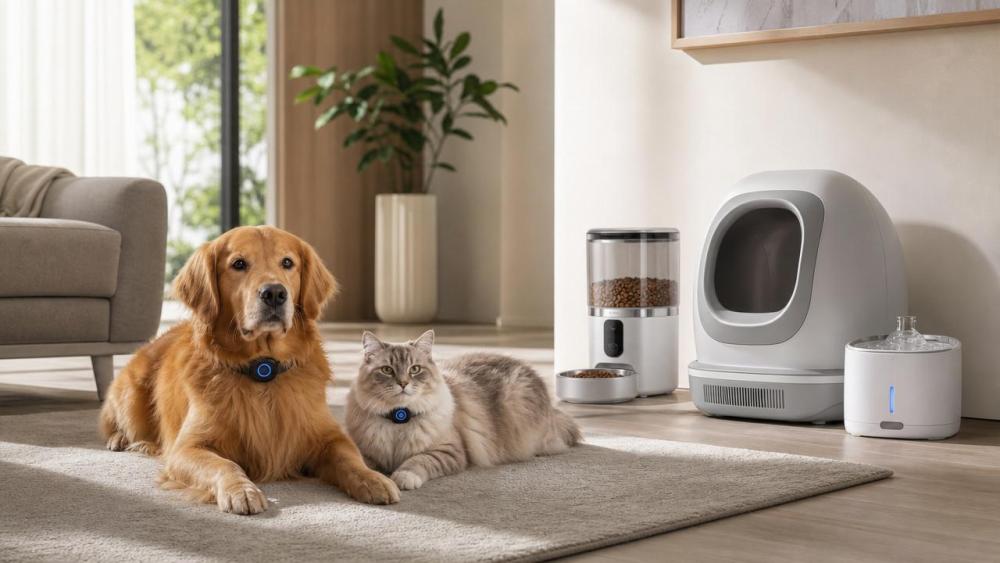
Pets are increasingly treated as family members, and spending patterns reflect that change. Buyers are paying for prevention, measurable outcomes, and products that reduce daily friction without lowering care standards.
This is where Pet Care Technology gains momentum. It brings together connected monitoring, automated routines, tailored nutrition, and therapeutic support inside the home, where most daily decisions actually happen.
The category also benefits from a strong transfer of human-medical thinking. Sensors, imaging logic, fluid controls, dose precision, and remote data visibility are being adapted for cross-species use cases.
VAHS closely follows this convergence because it does not stop at consumer gadgets. The real market signal comes from how veterinary imaging, pet food processing, IoT hardware, pharma, and rehabilitation equipment are starting to reinforce one another.
The core trends shaping Pet Care Technology in 2026
Several trends now define the direction of the market. Together, they explain why home wellness is becoming smarter, more preventive, and more clinically informed.
Connected monitoring is replacing occasional observation
Traditional pet care relied heavily on visible symptoms. Smart collars, litter systems, feeding devices, and home sensors now capture behavior patterns before problems become obvious.
Movement changes, hydration shifts, stool irregularities, sleep disruption, and calorie intake can now be tracked as trend data. That creates earlier signals for owners and more useful context for veterinary follow-up.
Nutrition is becoming an engineered wellness system
Pet food is no longer judged only by flavor or format. Processing quality, nutrient retention, ingredient loading, and feeding precision are becoming part of the wellness conversation.
Advanced extrusion and freeze-drying technologies support higher meat inclusion, better texture control, and more stable nutrient delivery. At the household level, smart feeders extend that logic by controlling portions and timing with greater accuracy.
Veterinary logic is entering the home
Not every home device is a medical device, but the design language is clearly shifting. Pet Care Technology increasingly borrows from diagnostic workflows, evidence-based monitoring, and outcome-oriented care models.
This is especially visible in products that connect home data with clinical interpretation. Devices become more valuable when they help reduce guesswork rather than simply generate notifications.
Rehabilitation and mobility are moving closer to daily care
Aging pets, post-operative recovery, and orthopedic conditions are pushing mobility support into the home wellness discussion. Rehabilitation is no longer seen as a niche clinical add-on.
Hydrotherapy systems, guided exercise tools, and remote progress tracking are expanding the role of recovery technology. Even when advanced equipment remains clinic-based, home routines increasingly mirror rehab principles.
Where these trends connect across the value chain
The strongest opportunities usually appear where product categories support each other. Pet Care Technology performs best when it is understood as an ecosystem rather than a collection of isolated devices.
From an industry perspective, this cross-category structure is where VAHS provides useful context. The portal tracks how technology transfer, regulation, and ROI logic interact across the pet care economy.
What deserves closer attention in real-world adoption
Not every innovation becomes a durable market winner. In practice, the strongest Pet Care Technology solutions tend to solve very specific problems while fitting into daily routines with minimal friction.
- Data quality matters more than feature count. Useful trends beat noisy dashboards.
- Clinical relevance matters. Devices should support decisions, not just generate novelty.
- Compliance cannot be treated as a late-stage issue, especially for connected hardware.
- Mechanical reliability is essential in feeders, litter systems, and mobility equipment.
- Premium positioning works best when outcomes can be explained clearly.
This is also why regulatory and technical intelligence remain central. FCC, CE, and veterinary labeling expectations can directly shape market access, product claims, and channel confidence.
In addition, ROI needs to be viewed beyond hardware margins. Connected pet products often create value through data services, replenishment cycles, care subscriptions, and stronger customer retention.
How Pet Care Technology is being applied at home
Home wellness use cases are becoming more layered. They now extend from basic automation to condition-specific support and post-clinic continuity.
Daily care automation
Smart litter boxes, automated feeders, and app-connected hydration tools reduce repetitive tasks. More importantly, they turn routine activities into measurable health touchpoints.
Preventive observation
Behavioral drift often appears before visible illness. Continuous monitoring helps surface subtle changes in eating, movement, elimination, and rest patterns.
Recovery and senior support
Older pets and post-surgical cases need structured routines. Connected mobility tools, guided exercise, and rehabilitation-informed care plans support safer recovery outside the clinic.
Nutrition personalization
Precise feeding is becoming more relevant for weight control, digestive stability, and disease management. Processing technology upstream and dispensing technology downstream increasingly work as one system.
A practical framework for evaluating the next move
The most useful way to assess Pet Care Technology in 2026 is to start with care pathways, not devices. That means asking how information, equipment, and services support one another over time.
- Map the strongest demand signals across hygiene, nutrition, diagnostics, and recovery.
- Check whether the product creates clinically meaningful or behaviorally reliable data.
- Review mechanical durability, sensor performance, and maintenance burden.
- Assess compliance exposure early, especially for wireless and health-related claims.
- Compare one-time hardware revenue with long-term service and replenishment potential.
Seen this way, Pet Care Technology is not a short-term novelty cycle. It is part of a broader reorganization of home wellness, where advanced pet care becomes more data-aware, preventive, and integrated with veterinary logic.
The next step is to evaluate which technologies genuinely improve care continuity, which categories can support premium positioning, and where cross-category intelligence can reduce risk before investment decisions are made.
Related News
- What to Check in a Veterinary Oncology Drug Manufacturer: GMP, Pipeline, and SupplyJun 22, 2026Veterinary Biological Fellow
- Pet Food Packaging Systems for Treats: Which Formats Work Best for Small Batches?Jun 22, 2026Pet Nutrition Extrusion Scientist
- How to Evaluate a Veterinary Radiography Systems Manufacturer Before BuyingJun 22, 2026Veterinary Diagnostic Architect
- Veterinary CT Systems Explained: Slice Count, Scan Speed, and Clinic FitJun 22, 2026Veterinary Diagnostic Architect
- How to Choose a Smart Pet Water Fountain for Multi-Cat HomesJun 22, 2026Companion Animal IoT Strategist
- FCC Tightens RF Immunity Rules for AI Pet FeedersJun 22, 2026Companion Animal IoT Strategist