
Veterinary Rehabilitation Equipment: When Hydrotherapy Beats Laser Therapy
When hydrotherapy becomes the better choice in Veterinary Rehabilitation Equipment
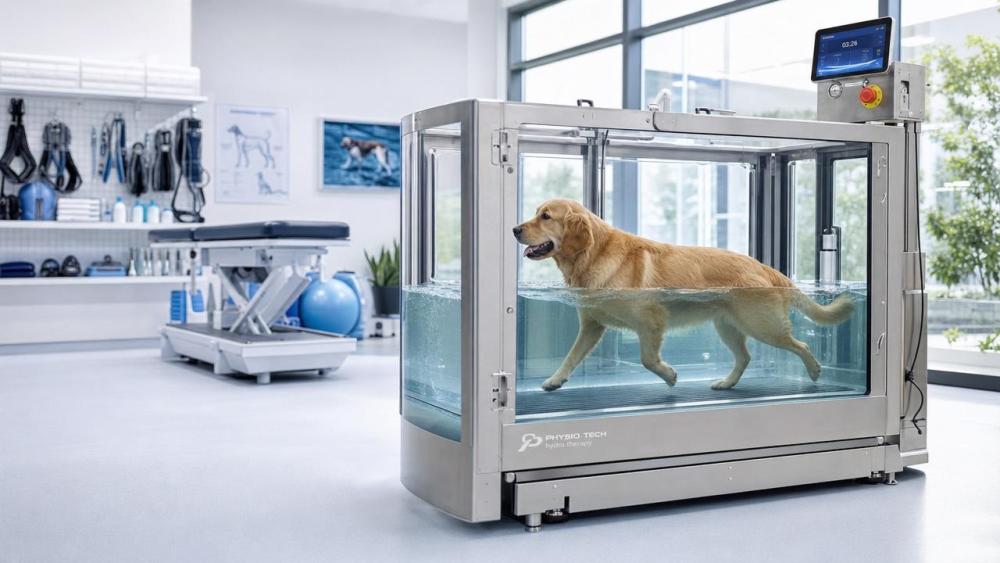
In daily rehab work, the debate is rarely about which modality sounds more advanced.
The real question is which Veterinary Rehabilitation Equipment fits the animal’s movement problem, pain level, and recovery pace.
Hydrotherapy often wins when the goal is not only pain relief, but guided motion under reduced weight-bearing conditions.
That matters in a market where pets are treated like family members, and recovery expectations look closer to human rehabilitation standards.
VAHS follows this shift across veterinary imaging, mechatronic controls, smart care hardware, and animal rehab systems.
Within that broader ecosystem, hydrotherapy equipment stands out because it combines biomechanics, sanitation control, and repeatable therapy protocols.
Laser therapy still has value, especially for localized inflammation and pain management.
But when a case requires muscle rebuilding, gait retraining, or safer early ambulation, hydrotherapy usually offers a wider functional advantage.
Why different cases ask different things from Veterinary Rehabilitation Equipment
It is easy to compare modalities by feature lists, yet rehab outcomes depend more on the clinical scenario than the headline specification.
A post-operative dog recovering from cruciate repair does not need the same intervention pattern as an older arthritic Labrador.
One needs protected movement with progressive loading.
The other may need ongoing joint-friendly exercise that preserves mobility without flare-ups.
This is where Veterinary Rehabilitation Equipment should be judged by function, not by novelty.
Hydrotherapy changes the mechanical environment around the patient.
Buoyancy reduces load, water resistance slows unstable movement, and warm water can improve confidence in guarded animals.
Laser therapy works differently.
It is often selected to support tissue healing or pain modulation, but it does not directly train coordinated movement.
In actual use, that difference is often the turning point.
Post-surgical recovery is where hydrotherapy often pulls ahead
After orthopedic surgery, the challenge is rarely pain alone.
The larger issue is how to restore gait without asking healing tissues to tolerate full land-based loading too early.
Underwater treadmills address that problem directly.
They allow controlled step cycles while water depth and belt speed shape the workload with more precision than open walking.
In these cases, Veterinary Rehabilitation Equipment should support measurable progression.
Clinicians usually look at stride symmetry, tolerance time, confidence during loading, and muscle engagement across sessions.
Laser therapy can still be used alongside this process.
However, if only one investment is being prioritized for function-first recovery, hydrotherapy often creates more visible movement change.
That is one reason VAHS tracks hydrotherapy as a biomechanical system, not merely as an accessory treatment.
What matters most in this setting
- Stable entry and exit design for animals with weak hindlimb control
- Water depth adjustment that matches body size and surgical site protection
- Consistent temperature management to reduce guarding and stress
- Clear sanitation workflow between patients with different wound histories
Chronic arthritis needs comfort, but also sustainable movement
Arthritic cases often look simpler than they are.
Pain control is important, but long-term decline usually comes from reduced activity, muscle loss, and cautious compensation patterns.
This is where hydrotherapy tends to outperform a pain-only approach.
Warm, supported exercise helps maintain joint motion while lowering impact forces on stiff limbs.
Many animals tolerate aquatic sessions longer than land drills because the environment feels safer and less punishing.
Laser therapy may reduce soreness around specific joints.
Still, it does not solve the practical issue of deconditioning.
For chronic cases, Veterinary Rehabilitation Equipment should help preserve daily function over months, not only improve comfort after one session.
The better judgment method is to ask whether the case needs symptom relief, movement maintenance, or both.
If function has already declined, hydrotherapy usually becomes central rather than optional.
Muscle rebuilding and weight management are different from pain treatment
Another common setting involves obesity, post-injury weakness, or athletic dogs returning to performance.
These cases are less about calming irritated tissue and more about rebuilding capacity.
Hydrotherapy gives a rare combination of resistance and protection.
The animal works against water, yet avoids the same joint impact seen on hard flooring.
That makes Veterinary Rehabilitation Equipment such as underwater treadmills useful far beyond surgical follow-up.
In conditioning-focused programs, session design matters more than broad claims.
Water level, speed, duration, and recovery intervals should match endurance, not just diagnosis.
Laser therapy can support comfort around overloaded regions, but it cannot replace load-managed exercise.
When the target is stronger muscle recruitment and better cardiovascular tolerance, hydrotherapy generally has the clearer role.
The decision points are easier to see when scenarios are compared directly
A side-by-side view often helps separate true equipment needs from attractive but mismatched features.
Where selection mistakes happen in real Veterinary Rehabilitation Equipment planning
One frequent mistake is assuming all pain-related cases need the same device path.
Pain is only one layer.
The more important question is whether the patient also needs controlled movement exposure.
Another mistake is evaluating Veterinary Rehabilitation Equipment by treatment intensity alone.
A stronger output claim means little if the workflow does not match patient handling, sanitation, and staff timing.
Hydrotherapy systems also bring operational conditions that should not be ignored.
- Water treatment quality affects safety and reputation
- Floor drainage and electrical protection influence installation feasibility
- Breed size range changes tank dimensions and ramp design needs
- Session throughput affects the true return on heavy equipment
VAHS often places these details in the same conversation as imaging, compliance, and smart hardware integration.
That broader view matters because rehabilitation equipment is not used in isolation.
It sits inside a clinical system shaped by diagnostics, recordkeeping, maintenance standards, and patient monitoring habits.
A practical way to match Veterinary Rehabilitation Equipment to the setting
Before deciding between hydrotherapy and laser therapy, it helps to map the case mix rather than compare brochures.
That usually reveals which modality carries the heavier clinical workload.
- Review how many cases need gait retraining, not just pain control
- Check whether long-term arthritis management is a recurring service line
- Confirm available space, drainage, hygiene process, and staff handling confidence
- Measure whether outcomes must show functional progress or symptom relief only
- Estimate maintenance demands, water management costs, and equipment uptime requirements
If movement restoration is central, hydrotherapy usually justifies its complexity.
If most cases involve localized discomfort without major mobility loss, laser may carry more daily value.
In many mature programs, the most effective answer is not either-or.
It is recognizing that Veterinary Rehabilitation Equipment should be layered according to functional need.
Hydrotherapy leads when safe loading, muscle rebuilding, and movement confidence define success.
The next step is to document actual case patterns, facility constraints, and progression metrics before finalizing the equipment mix.
Related News
- Veterinary X Ray Cost Breakdown: Exam Type, Sedation, Views, and Regional Price FactorsJun 12, 2026Veterinary Diagnostic Architect
- Dog Hydrotherapy Pool vs Underwater Treadmill: Which Rehab Setup Fits Your Clinic?Jun 12, 2026Animal Biomechanics Expert
- Freeze Dried Raw Pet Food: Benefits, Rehydration Tips, and Common Feeding MistakesJun 12, 2026Pet Nutrition Extrusion Scientist
- How to Choose a Pet Grooming Table: Weight Capacity, Lift Type, and Safety FeaturesJun 12, 2026Animal Biomechanics Expert
- How to Choose Freeze Dried Cat Food for Indoor Cats, Kittens, and SeniorsJun 12, 2026Pet Nutrition Extrusion Scientist
- Veterinary Imaging Equipment: Ultrasound or X-Ray for First-Line Exams?Jun 10, 2026Veterinary Diagnostic Architect